
"Just a few more bites" is a phrase most parents have said at the dinner table. At Kids Academy, we take a different approach, and it's about more than food. It's about the skills children carry with them into school.
Mealtimes are a readiness skill, too
School readiness isn't only about letters, numbers and following instructions. It's also about a child's ability to self-regulate, make decisions, and manage their own needs, skills that mealtimes are quietly building every day.
According to Raising Children Network, pleasant, low-pressure mealtimes support children's willingness to try and enjoy food far more effectively than pressure or insistence. Forcing a child to finish their plate tends to increase resistance to food, not reduce it, and it removes an opportunity for children to practise listening to their own hunger and fullness cues.
How this fits our curriculum
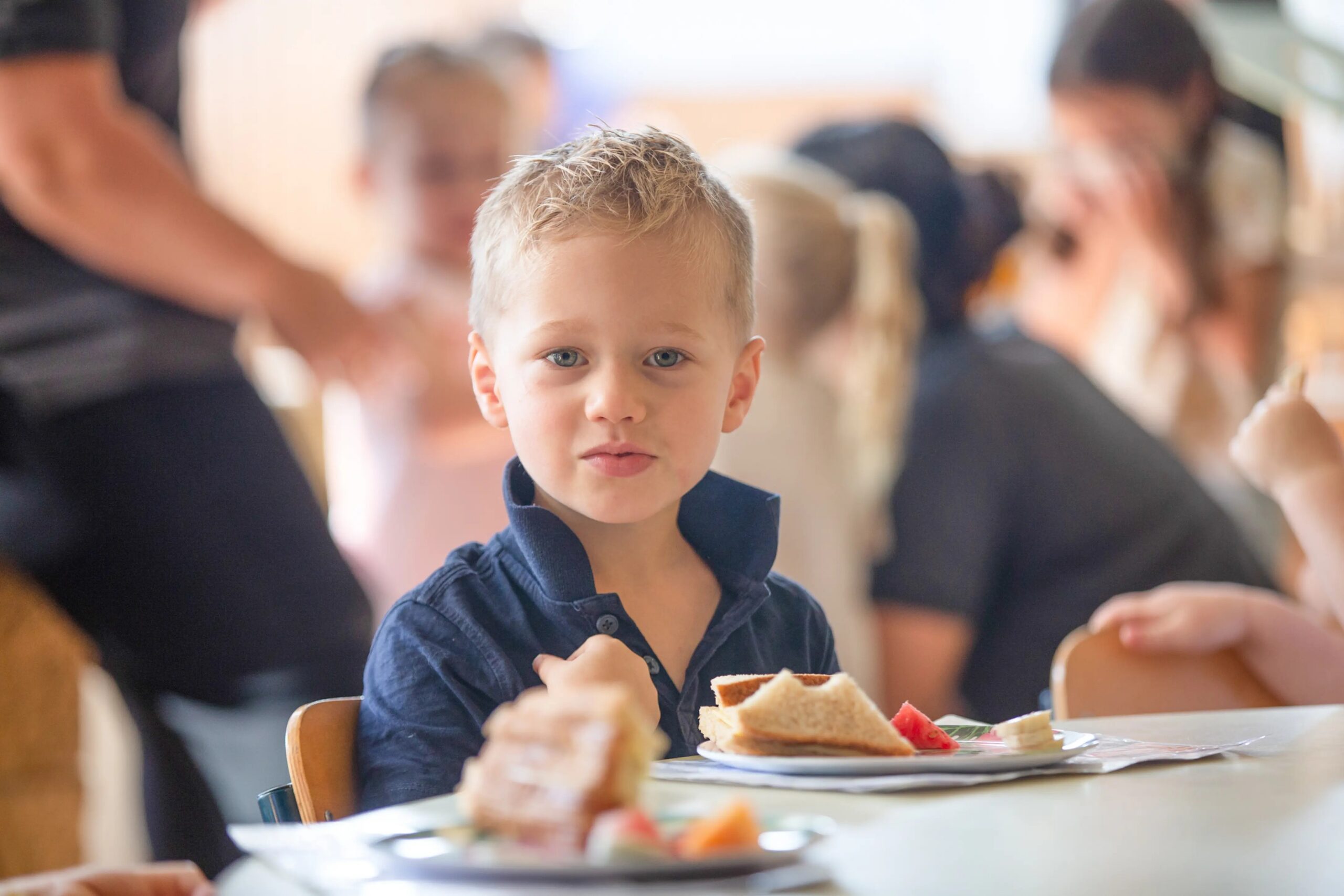
Under our Lifelong Learning Curriculum (LLC), mealtimes are treated as a genuine learning experience, not a pause in the day. At the table, children are building:
- Independence - serving themselves, choosing what and how much to eat, and managing their own plate
- Self-regulation - recognising when they're full or still hungry, and acting on that rather than an external rule
- Social skills - sharing food, conversing at the table, and taking turns during family-style meals
These are the same underlying skills that support a smooth transition to a structured school day, where children are expected to manage their own lunchbox, pacing and choices with far less adult direction than in the early years.
Our new Spring menu supports this approach
Developed with nutrition partners The Biting Truth and Woolworths@Work, our new Spring menu includes dishes designed around choice and independence, our Build Your Own Burrito Bowls being a good example, where children select their own fillings and build their own plate.
Every dish still meets the nutritional standards children need for growth and energy, the shift is in how mealtimes are structured, not in what's on offer.
It's a timely topic, too: National Nutrition Week (12-18 October) is shining a national spotlight this year on positive food experiences for children, a theme closely aligned with how we already run mealtimes at Kids Academy.
Bringing this home
A few ways to build the same independence and confidence at your own dinner table:
- Let your child serve themselves, even if the portions look a little unusual at first
- Avoid commenting on how much (or little) they've eaten
- Keep reintroducing refused foods without pressure - familiarity tends to build gradually, sometimes over many attempts
- Look at intake across the week rather than judging a single meal
If you're curious how your child manages independence and decision-making at mealtimes specifically, it's worth asking their educator - they'll have observations from the room that can help.
Read more about our approach to food on our Healthy Menu & Nutrition page, or learn more about supporting fussy eaters.