
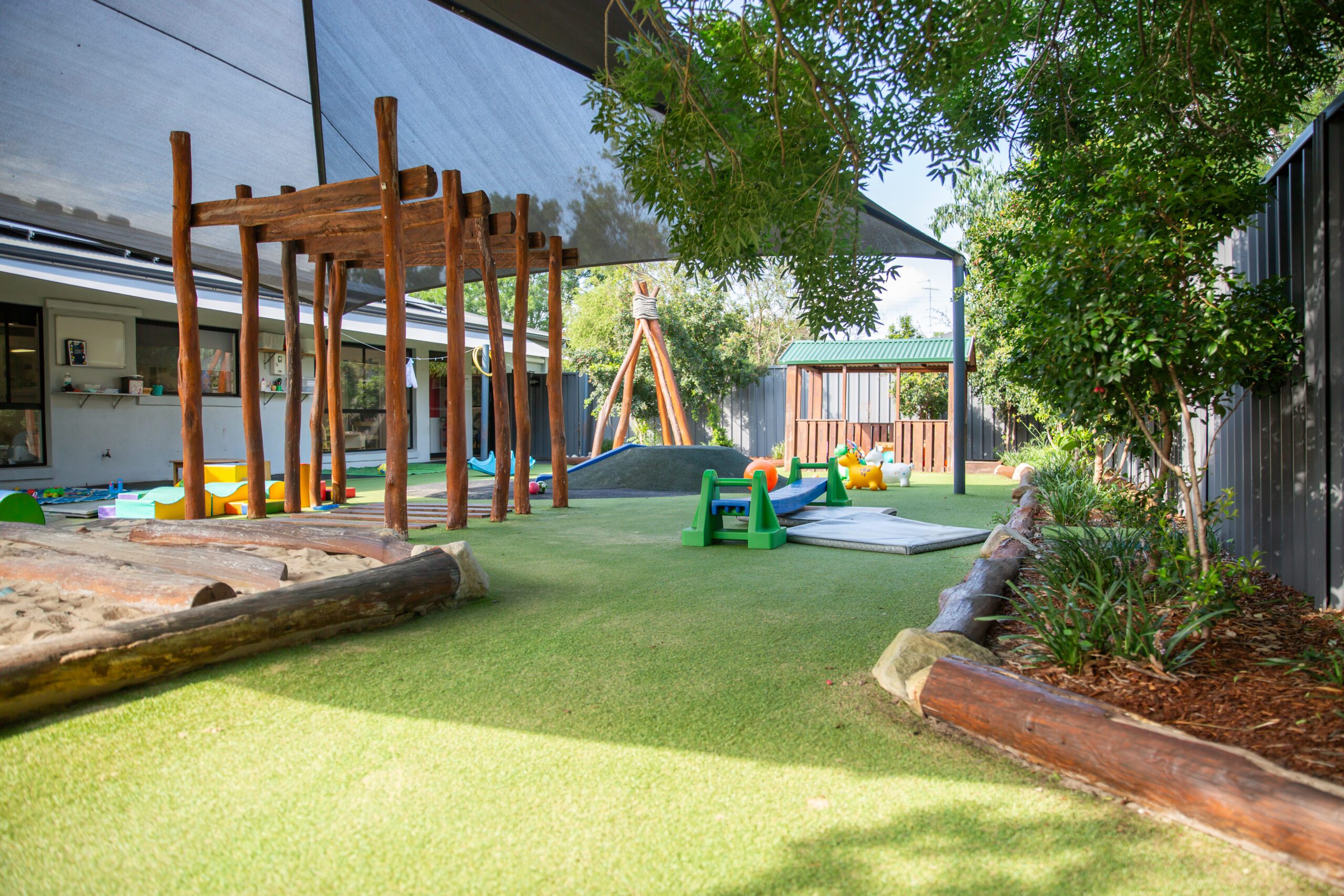

Climbing, running, tumbling, balancing, digging, negotiating the rules of a complex physical game with a group of peers - these might look like simple outdoor fun. But for children in the early years, they are also some of the most important developmental work happening anywhere in the day. Risky play, play that involves a genuine degree of physical challenge and managed uncertainty, builds the physical confidence, cognitive capacity, and social skills that children need not just for childcare, but for school and beyond. Here's what the research says, and how we structure outdoor play at Kids Academy to make the most of it.
What risky play actually means
The term risky play can sound alarming, but the definition is precise. According to Play Australia's Risky Play Position Statement, risky play is not unsafe play. It may involve some risk of minor injury, but it does not involve hazards that cause serious harm.
In practice, risky play includes climbing at height; speed and momentum play like running, swinging, and sliding; rough-and-tumble physical play; using real tools; exploring near natural elements; and playing in spaces that offer some independence from direct adult supervision. What distinguishes risky play from genuinely dangerous play is the presence of intentional supervision, well-designed environments, and educators who understand how to support children's challenge without eliminating it.
The link between risky play and school readiness
For families focused on preparing children for the transition to school, the risky play research is particularly relevant. The skills children develop through physical challenge and outdoor exploration map directly onto the capabilities schools look for in a kindergarten-ready child.
Risky play builds physical strength, coordination, balance, and fine motor skills, and develops children's sense of mastery over their own bodies. It encourages problem-solving and decision-making: children must assess situations, make choices, and adapt their actions, fostering critical thinking. It also supports emotional development, giving children the opportunity to confront and manage fear, anxiety, and stress, and build resilience, confidence, and self-assuredness.
Self-regulation, the ability to manage impulses, persist through difficulty, and recover from frustration, is one of the strongest predictors of school success. Research has found that access to well-managed risky play is associated with measurable improvements in self-regulation, creativity, focus, and self-confidence in children aged two to five. These are not peripheral skills. They are foundational to everything a child will be asked to do in a classroom.
Research has also established that the developmental benefits of risky play extend beyond early childhood and into adult life, which means the investment made in outdoor challenge during the early years pays dividends well past the first day of school.
What the Australian curriculum frameworks say
Australia's early learning frameworks directly support children's access to physical challenge and managed risk. The Early Years Learning Framework (EYLF) establishes under Outcome 1 that children develop autonomy, resilience, and a sense of agency through taking considered risks in their decision-making and learning to cope with the unexpected. Under Outcome 3, the EYLF recognises that challenging outdoor environments are central to children's physical learning and mental wellbeing.
NQS Quality Area 3 requires the physical environment to be safe, suitable, and organised to support full participation in the programme, which includes, not excludes, physical challenge appropriately managed.
At Kids Academy, our outdoor programme is planned in alignment with these frameworks. Outdoor play is not a gap in the programme, it is part of the programme.
How Kids Academy structures outdoor play and physical challenge
At Kids Academy, outdoor time is planned and purposeful. Our environments are designed to offer children a graduated range of physical challenges, from the sensory exploration of natural materials for our youngest children, through to the complex team play and physical negotiation of our preschool rooms.
Outdoor spaces include climbing structures designed to offer real challenge, loose parts and natural materials that support construction and problem-solving, digging and gardening areas, and open space for running, chasing, and the kind of vigorous physical play that builds cardiovascular fitness alongside social skills.
Our educators apply benefit-risk thinking to outdoor programming: understanding that restricting children's access to challenge carries a developmental cost, and that their role is not to remove uncertainty from children's play, but to supervise it with skill and intention. This means being present without hovering, and knowing when to let a child work something out for themselves.
The Lifelong Learning Curriculum guides how physical challenge and outdoor exploration are woven across our rooms and age groups, ensuring that outdoor play is progressive, intentional, and connected to the broader learning goals for each child.
Extending risky play at home
Families can support the benefits of outdoor challenge beyond the centre with some straightforward changes to how time outside is structured:
- Choose challenging playgrounds - look for equipment with height, varied textures, and structures that require genuine physical problem-solving, rather than only low, smooth, and predictable equipment.
- Let them lead - resist the urge to direct outdoor play. Children who are given unstructured time outdoors with some interesting materials or terrain will generally find their own level of challenge.
- Introduce real tools - age-appropriate gardening tools, craft scissors, simple construction materials. Supervised use of real objects builds confidence, concentration, and fine motor skills simultaneously.
- Stay back when it's hard - when your child is frustrated, struggling, or working something out physically, the instinct to step in is strong. Pausing long enough to let them try is often the most valuable thing you can do.
- Get outside in all conditions - wind, cold, and light rain are not reasons to stay indoors. Physical play in varied outdoor conditions builds hardiness and environmental awareness alongside physical skill.
The confident child on day one of school
The children who arrive at school with strong physical confidence, the ability to problem-solve under pressure, the emotional tools to manage frustration, and the social skills to negotiate conflict with peers, these are the children who settle quickly, engage readily, and build relationships with ease.
Play Australia is clear that when risk is removed from children's play, so too are valuable opportunities to develop independence and confidence. Children need chances to judge their own abilities, make decisions, and sometimes fail in safe environments.
At Kids Academy, outdoor challenge is not an add-on to children's preparation for school. It is central to it.