
National Reconciliation Week runs from 27 May to 3 June each year, marking two landmark dates in Australia's reconciliation history - the 1967 referendum and the 1992 Mabo decision. The 2026 theme is All In: a clear, direct call for every Australian to take an active role in reconciliation, not just during this week, but as an ongoing commitment. At Kids Academy, that commitment is built into how we approach learning every day, through our curriculum, our environments, and our partnership with Wandana Aboriginal Education.
Why reconciliation education belongs in the early years
The early childhood years are when children develop their foundational understanding of the world - who belongs, whose stories matter, how we relate to the land and to each other. This makes early learning environments one of the most important places where reconciliation can be actively supported.
Children in the early years are building frameworks for how they understand identity, community, and history. When First Nations perspectives are part of that framework from the beginning, when children learn to acknowledge Country, hear Aboriginal and Torres Strait Islander stories, and engage with First Nations knowledge as a valued and integral part of Australian life, those understandings become formative rather than corrective.
At Kids Academy, we take this responsibility seriously. Reconciliation education is not a week-long programme. It is embedded in the structure of how we teach and what we teach throughout the year.
Our partnership with Wandana Aboriginal Education
The Wandana Aboriginal Education partnership is central to how Kids Academy approaches First Nations learning. Wandana brings genuine cultural knowledge and community authority to the work of early childhood education, and through this partnership, the Lifelong Learning Curriculum incorporates First Nations perspectives in a way that is accurate, respectful, and grounded in lived experience rather than assumption.
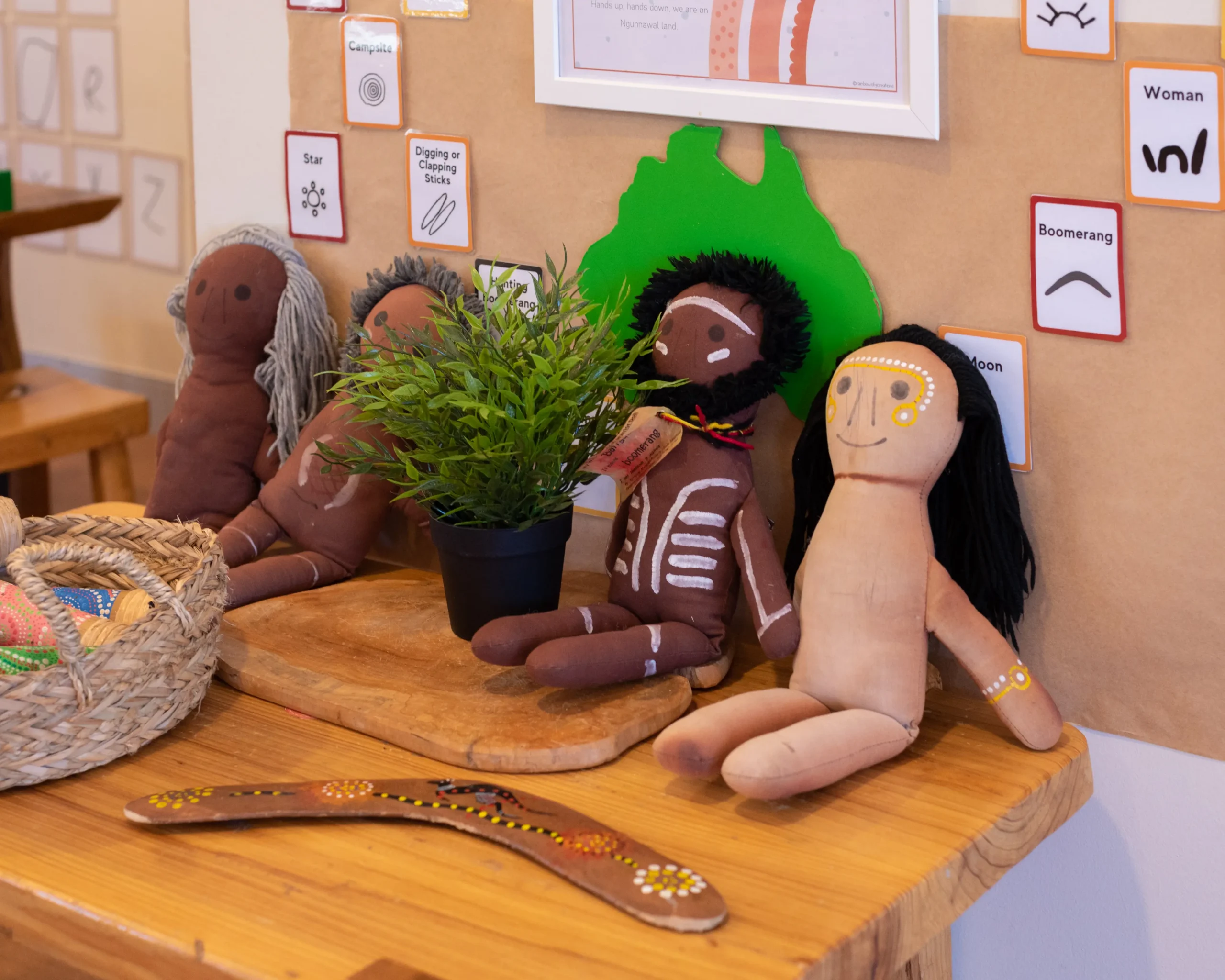
Wandana's educators and cultural knowledge holders work alongside our teams to shape what children experience: the stories they hear, the art practices they explore, the languages they encounter, and the relationship with Country they begin to develop. This partnership ensures that First Nations learning at Kids Academy is authentic, guided by the people who hold the knowledge, not interpreted from outside it.
What First Nations learning looks like at Kids Academy
First Nations learning is integrated into the Kids Academy programme in structured, purposeful ways that connect to children's everyday experiences and developmental stages.
Children engage with storytelling traditions that carry deep knowledge about Country, community, and connection, developing listening skills and an understanding of narrative that supports literacy and much more. They explore art-making practices rooted in First Nations traditions, learning to approach visual language with curiosity and respect. They are introduced to words and phrases from local Aboriginal and Torres Strait Islander languages, building an early understanding of Australia's extraordinary linguistic diversity. And they develop an active relationship with the concept of Country, learning what it means to know a place, care for it, and understand the people whose connection to it goes back tens of thousands of years.
These are not isolated activities. They are threads woven through the programme across the year, ensuring that First Nations perspectives are a consistent and natural part of how children at Kids Academy understand the world.
All In - the 2026 theme and what it means for families
The 2026 theme All In makes clear that reconciliation is not a spectator sport, it calls on all Australians to step away from the sidelines and take action to make change.
Reconciliation is not just about acknowledging the past; it is about working together to create a better future. For families with young children, Reconciliation Week is an opportunity to begin, or continue, those conversations at home, in age-appropriate and honest ways.
Some starting points for families:
- Learn whose Country your family lives and plays on, and practise acknowledging it together
- Visit the AIATSIS Map of Indigenous Australia to explore the language groups of your local area
- Read picture books by First Nations authors and illustrators with your children this week
- Attend a local Reconciliation Week event or community activity
- Ask your child what they've been learning about Country and culture at Kids Academy - children are often the best guides into this conversation
A week of focus in a year-round commitment
Reconciliation Week gives our community a dedicated moment to reflect, celebrate, and recommit. At Kids Academy, we use it as an opportunity to acknowledge the learning already happening in our rooms, to express our gratitude to Wandana Aboriginal Education for their ongoing partnership, and to think carefully about how we continue to deepen and strengthen our approach.
We believe that children who grow up with First Nations knowledge, culture, and history as part of their everyday learning are better prepared, not just for school, but for life as Australians who understand and value the full story of this Country.
View our Reconciliation Action Plan.