
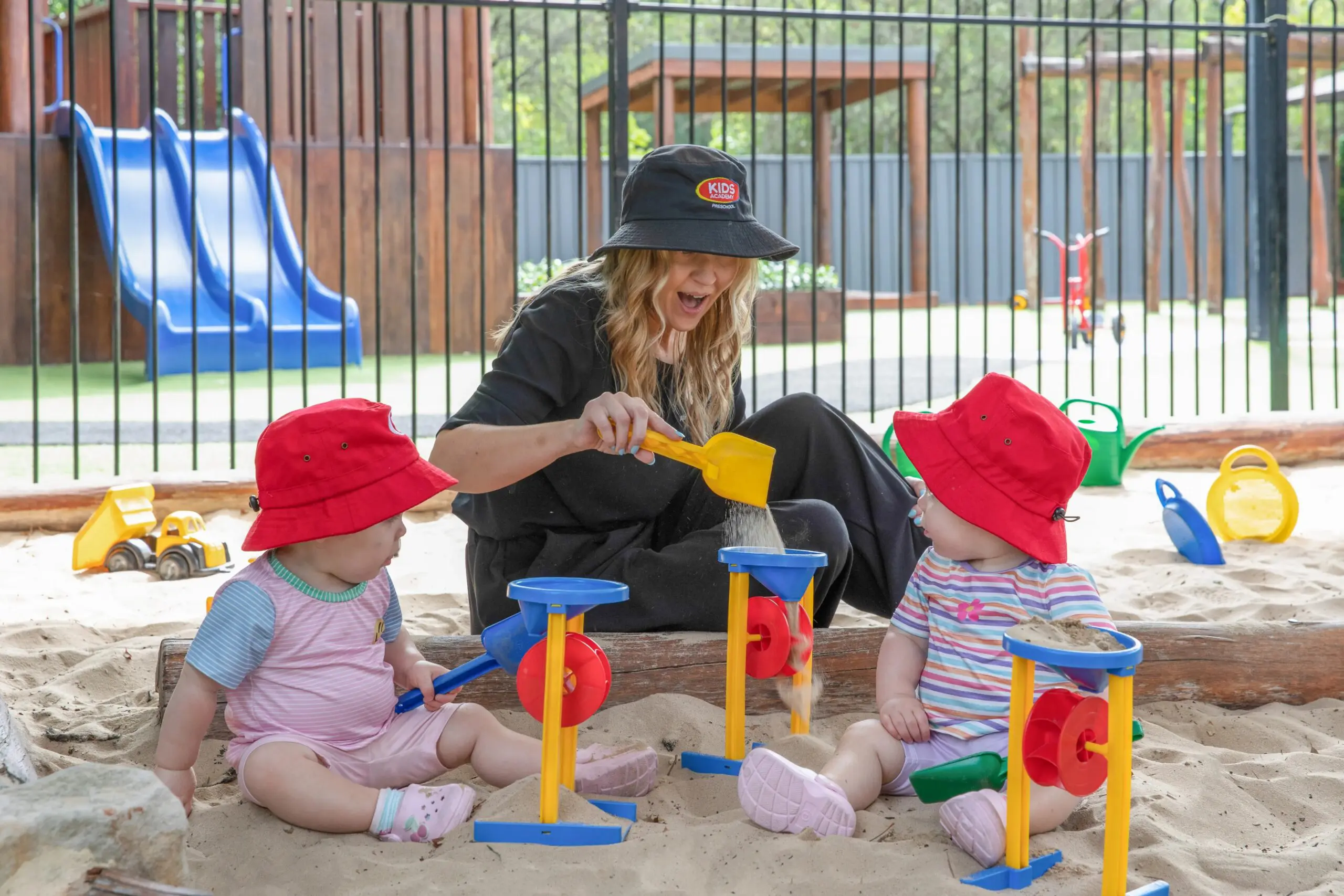

Every October, Safe Work Australia runs National Safe Work Month. This year's theme is "Safe work is for life." Your child's centre is a workplace for educators, and a place where your child learns and plays every day.
The checks that keep educators safe are the same checks that keep children safe. They also help children learn something important: how to notice risks and look after themselves. Those are skills they'll take with them to big school. Here's what everyday safety looks like at a childcare centre.
What a safe learning environment looks like
Every approved centre in Australia must keep its premises, furniture and equipment safe, clean and in good repair. This is set out in the Education and Care Services National Regulations. It's also part of how centres are assessed against the National Quality Standard.
In a safe room, you might notice:
- Secure entry, so only authorised people can come in
- Fences and gates that close and latch properly
- Stable furniture that's the right size for children
- Rooms set out so educators can see and hear every child
- Clean toys, surfaces and equipment, cared for on a regular schedule
Many of the most important safety features are easy to miss. The shelf fixed to the wall. The cord kept out of reach. Good safety often looks like nothing at all.
The checks before the day begins
Before play starts, educators look over the indoor and outdoor spaces. They check for:
- Gates and doors that latch properly
- Sticks, debris or broken items in the yard, especially after wind or rain
- Anything in the sandpit that shouldn't be there
- Wet or slippery floors
- Anything broken, loose or out of place
If something isn't right, it's removed, fixed or blocked off before children use the space. Then it's reported so it can be repaired properly.
How centres think about risk
A risk assessment comes down to three questions. What could go wrong? How likely is it, and how serious would it be? What will we do to reduce the risk?
Centres use this thinking for rooms, outdoor areas and daily routines. For excursions, it's a legal requirement. A risk assessment must be done before children leave the centre. For regular outings, like a walk to the local park, a new assessment is needed at least every 12 months, or sooner if something changes.
Assessing risk doesn't mean removing every challenge. Children need chances to climb, balance and try new things. These experiences build physical confidence and help children judge what they can safely do. Find out more in our post on why risky play matters for school readiness.
Equipment checks, from cots to climbing frames
Busy rooms mean busy equipment, so it's checked regularly:
- Cots and portacots are checked for damage, and to make sure folding and locking parts work properly
- High chairs and nappy change areas are checked for wear and stability
- Toys are cleaned and checked for broken parts or small pieces that could be a choking risk
- Playground equipment and soft fall are inspected for wear, and repaired or topped up as needed
Australian Standards apply to many items in a centre, including playground equipment and surfacing. Centres are expected to maintain equipment to these standards and follow manufacturers' advice. Anything broken is taken out of use until it's fixed or replaced.
Keeping outdoor play safe
Outdoor play is where children run, climb and explore. Educators keep it safe by:
- Positioning themselves so every part of the yard is supervised
- Using shade, SPF 50+ sunscreen and hats when children play outside
- Checking surfaces like slides and metal rails, which can get very hot in summer
- Closely supervising any water play, and emptying containers straight after
- Watching the weather and moving play inside when conditions change
Raising Children Network has more tips on playground safety for your weekend park trips. Our sun safety guide explains how we protect children under the Australian sun.
Safety habits that carry through to school
Children don't just benefit from a safe environment. They learn from it. Everyday routines give them practice with safety skills they'll use at school and beyond:
- Putting on a hat before heading outside
- Washing hands before eating
- Telling an educator when something is broken or doesn't feel right
- Following instructions calmly during an emergency drill
Centres must rehearse their emergency and evacuation procedures at least every three months, and each rehearsal is recorded. By the time children start school, lining up and following a safety routine already feels familiar.
Questions you can ask your centre
You're always welcome to ask how safety works at your child's centre. Try these questions:
- How do you check the rooms and yard each day?
- When was the playground last inspected?
- Where is the emergency evacuation plan displayed?
- What happens when a piece of equipment breaks?
- How will you let me know if something changes?
Our childcare centre checklist also covers safety and security. If you ever notice something that worries you, tell your educators or centre director, or raise a concern online.
Safe work is for life
Educators who feel safe at work can give children their full attention. That's why Safe Work Month matters to everyone at Kids Academy.
To learn more about safety at your child's centre, have a chat with your centre director or educators. You can also read about our safety commitment.