
Communication is one of the most important foundations a child builds in the early years. Strong language skills support social connection, emotional development, and the literacy and learning capabilities children draw on throughout school. So it's no wonder parents pay close attention, and no wonder many find themselves wondering whether their toddler's speech is on track.
The good news is that language development follows a broad range of typical patterns. Many children who seem slow to talk catch up completely on their own. At the same time, knowing what to look for, and understanding when to seek support, helps families feel confident and prepared.
Speech and language milestones by age
Here's a general guide to what most children are doing at each stage. These are signposts, not strict rules - individual variation is completely normal.
- 12 months: Babbling with varied sounds, some gestures (pointing, waving), and possibly one or two words. Understanding tends to come before speaking at this age.
- 18 months: Around 10 or more words, active use of pointing to show interest, and beginning to follow simple instructions. Your child may combine words and gestures to get their message across.
- 2 years: Most two-year-olds have 50 or more words and are starting to combine two ("all done", "more please", "mummy car"). Around half of what they say is understood by strangers.
- 3 years: Children are using short sentences and vocabulary is growing fast. Familiar adults should understand most of what they say.
- 4-5 years: Longer, more complex sentences, lots of questions, and emerging storytelling. This is a period of rapid language expansion in preparation for school.
Signs worth discussing with your GP or a speech pathologist
Late talking is not automatically a cause for concern, but there are certain signs that are worth raising with a professional. Early support, when it's needed, makes a meaningful difference to long-term outcomes.
It's worth talking to your GP or a speech pathologist if your child:
- Has fewer than 10 words at 18 months
- Isn't using two-word combinations by 2 years
- Is difficult to understand most of the time at age 3
- Has lost words or skills they previously had - regression at any age is always worth flagging promptly
- Shows limited eye contact or isn't responding consistently to their name
Your GP is the right first point of contact, and can refer you to a speech pathologist for a full assessment.
How our educators build communication skills every day
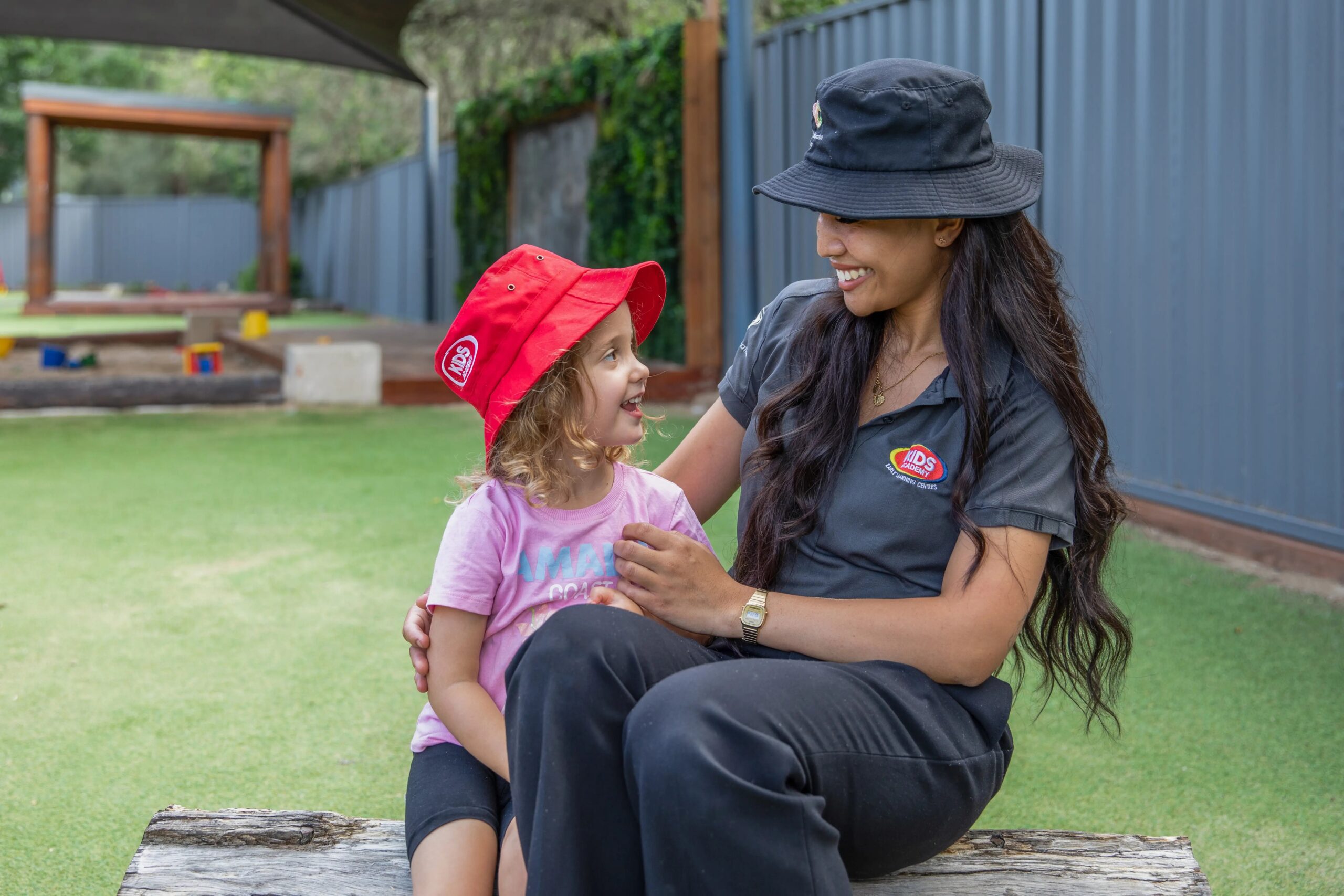
At Kids Academy, we know that strong communication foundations are built long before children reach school, and our educators intentionally support language development as part of every session.
Our Lifelong Learning Curriculum (LLC) guides educators to create environments where language is used purposefully and richly throughout the day: through back-and-forth conversation, shared reading, storytelling, group discussion, and play-based learning that follows children's interests. Educators introduce new vocabulary naturally, respond to each child's communication in ways that build confidence, and create space for children to express themselves.
These daily interactions are building the listening, vocabulary, and communication foundations that children will draw on across their schooling years.
More practical ideas in our post: Everyday Chats That Matter: How to Support Your Toddler’s Language Development at Home
Practical things you can do at home
Small, consistent habits make the biggest difference to language development. Everyday life offers plenty of natural opportunity:
- Talk through your day: narrate what you're doing during routines like bath time, getting dressed, and cooking. This builds vocabulary naturally.
- Read together every day: even a few minutes of shared reading is one of the most effective things you can do for language and literacy. Books with rhythm and repetition work particularly well for toddlers.
- Follow your child's lead: when they show interest in something, name it and expand on it. "Yes, that's a bird, it's flying up high!"
- Sing songs and rhymes: these support vocabulary, memory, and phonological awareness - all important for later reading.
- Respond to all communication attempts: sounds, gestures, and words all deserve a response. It shows your child that their communication is working.
- Limit background screen time during conversations where possible: back-and-forth interaction is what drives language growth.
Getting support
If you have any concerns about your child's speech or language, start with a conversation with your GP. They can refer you to a speech pathologist for a proper assessment.
Reliable Australian resources:
- Raising Children Network - a trusted parenting resource developed with leading Australian health and education professionals
- Speech Pathology Australia - for finding a qualified speech pathologist near you
- HealthDirect - for general health information and service referrals
There's no such thing as raising a concern too early. You know your child, and if something feels worth checking, it's always worth asking.